
Mapping Stakeholders: A Step-by-Step Guide
You might ask why effective stakeholder mapping is critical to successful change management? In any change initiative, whether it’s a digital transformation, organisational restructure, or cultural shift, one thing is always true; people matter. More specifically, understanding who your stakeholders are, what they care about, and how they
Read More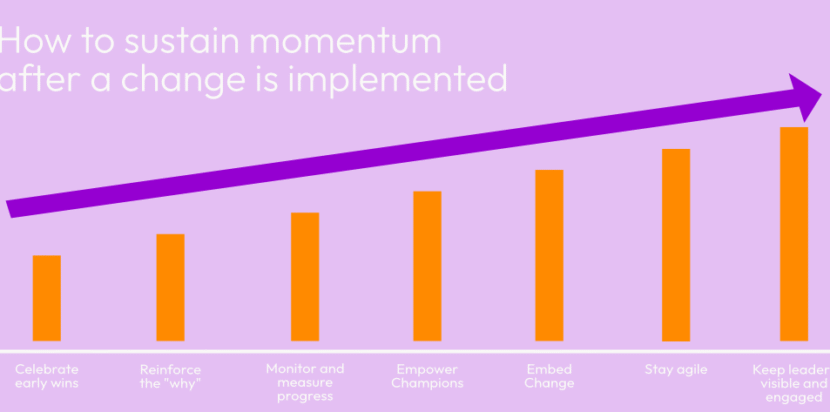
How to Sustain Momentum After a Change is Implemented
Implementing change within an organisation is often seen as the finish line, but in reality, it’s just the beginning. Whether you’re rolling out a new system, restructuring a department, or driving cultural transformation, sustaining momentum after the initial implementation is critical to ensuring long-term success. Too
Read More
How to Set KPIs for Change Initiatives
Change initiatives, whether they are digital transformations, culture shifts, or process overhauls, are complex, often disruptive, and essential for growth. But how do you know if your efforts are working? Enter KPIs: Key Performance Indicators. Well-designed KPIs provide a clear, measurable way to track progress and
Read More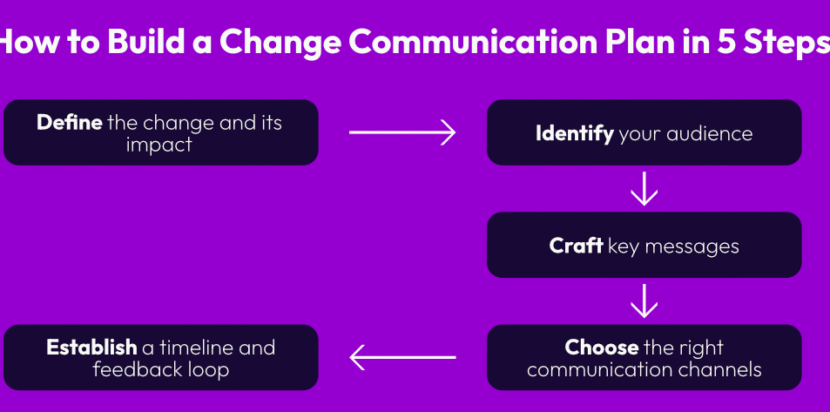
How to Build A Change Communication Plan in 5 Steps
Effective communication is at the heart of successful change management. Whether you are implementing a new system, restructuring teams, or rolling out a new strategy, how you communicate that change will directly impact how it’s received, understood, and adopted. A well-crafted change communication plan helps reduce
Read More
10 Steps to Personalise Copilot to Make it an AI Friend, Not a Foe
Artificial Intelligence is no longer just a buzzword; it’s becoming your daily teammate. Whether you’re using Microsoft Copilot in your productivity suite or GitHub Copilot for code assistance, the difference between a helpful partner and a frustrating tool lies in how well it understands you. The
Read More
The Future of Change Management: Emerging Trends and Predictions
Change management has evolved dramatically over the past decade, and the pace of transformation shows no signs of slowing. As we look toward the future, several key trends and innovations are reshaping how organisations approach change, driven by technological advances, shifting workforce expectations, and new understanding
Read More
The Human Side of Change Management: Building Trust and Empathy
At Good Change People, we believe Change Management is fundamentally about people. While strategies, processes, and technologies form the backbone of organisational transformation, the ultimate success or failure of any change initiative rests on the human response to it. Research consistently shows that the majority of
Read More
Managing Organisational Change Fatigue: Maintaining Team Morale
Organisations today face an unprecedented reality: constant change has become the norm. Digital transformations, restructuring initiatives, new technologies, process improvements, and market adaptations follow one after another, often overlapping and compounding. While this agility is essential for competitiveness, it has created a challenge that leaders cannot
Read More
The Psychology of Change: Why We Resist It and How to Overcome It
Heraclitus’ ancient wisdom stated that ‘Nothing is permanent except change’. Yet, despite its necessity and benefits, many individuals and organisations struggle to embrace it. The resistance to change is deeply rooted in human psychology, driven by factors such as fear, uncertainty, and loss of control. Understanding
Read More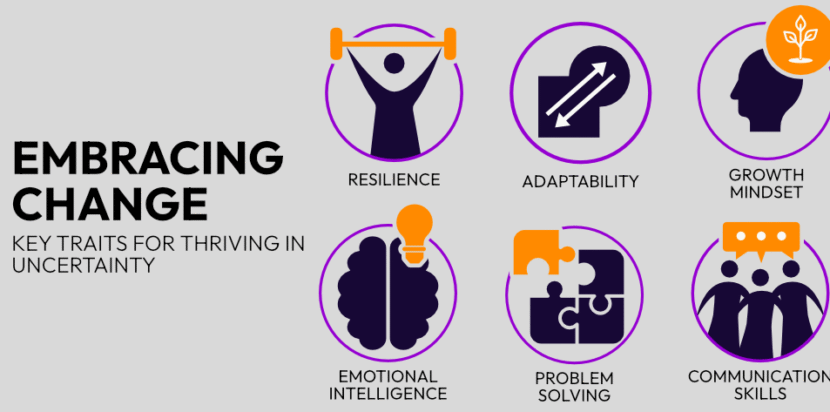
Embracing Change: Traits You’ll Need to Thrive Amongst Uncertainty
Change is a constant in both personal and professional life. Whether driven by technological advancements, market shifts, or unexpected global events, uncertainty is inevitable. While some individuals struggle with change, others adapt and thrive. What sets them apart? The ability to embrace change is rooted in
Read More