While processes and systems can be redesigned quickly, the deep-rooted values, behaviours, and norms that shape workplace culture are far more complex to influence. Cultural change is one of the most challenging aspects of organisational transformation. Yet without cultural alignment, most change initiatives fail to achieve lasting impact.
This article provides a structured view of cultural change – what it means, why it matters, and how organisations can actively shape it.
Understanding culture
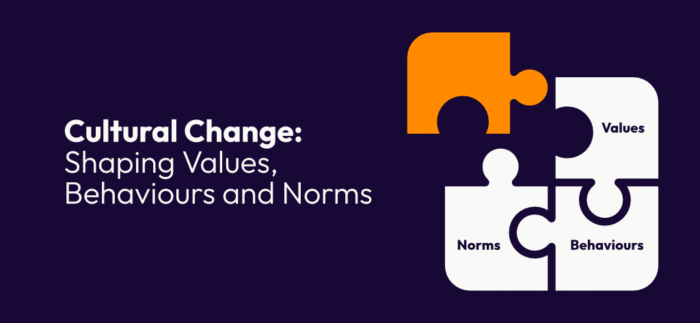
Culture is not a policy document or a set of posters on the wall. It is what people do when no one is watching. Three key elements interact to create organisational culture:
- Values – guiding principles that influence decision-making.
- Behaviours – daily actions and choices that bring values to life.
- Norms – unspoken rules that signal what is acceptable or unacceptable.
These elements can either reinforce one another to create consistency, or clash in ways that confuse and frustrate employees.
Why culture must be part of change management
Cultural change is not a “nice to have”. It is the foundation on which other changes succeed or fail. Consider the following impacts:
- Adoption of change: Employees who work in a culture of openness are more willing to try new approaches.
- Performance outcomes: Productivity, customer experience, and innovation are all heavily shaped by culture.
- Sustainability: Technical or structural changes fade without cultural reinforcement.
In short, culture determines whether transformation sticks.
The barriers to cultural change
Shaping culture is difficult because it is often invisible, emotional, and deeply ingrained. Common barriers include:
- Invisible norms – people may not even realise certain behaviours are culturally embedded.
- Emotional attachment – staff often cling to familiar ways of working.
- Leadership inconsistency – saying one thing but doing another undermines credibility.
- Short-term thinking – leaders underestimate the time required for cultural change to take root.
Acknowledging these challenges is the first step in overcoming them.
Shaping values: setting the foundation
Values act as a compass, guiding decisions and priorities. But values must be lived, not just written down. Practical actions include:
- Involving employees in defining values so they feel authentic.
- Linking values to organisational purpose to provide meaning.
- Embedding values into recruitment, appraisal, and recognition processes.
Tip: If you claim to value collaboration, but reward only individual performance, your stated values will quickly lose credibility.
Shaping behaviours: turning words into action
Behaviours are where values become visible. To influence them:
- Leaders must model them. Employees copy what they see at the top.
- Clarify expectations. Provide examples of what behaviours support each value.
- Reinforce alignment. Recognise and reward the right behaviours.
- Address contradictions. Tackle behaviours that run counter to the desired culture.
Culture often shifts through the accumulation of small behavioural changes – how meetings are run, how conflicts are resolved, and how decisions are explained.
Shaping norms: embedding culture in the everyday
Norms are the subtle forces that tell employees “this is how things are done here”. Leaders can influence them through:
- Rituals and routines. For example, regular open forums can reinforce transparency.
- Storytelling. Celebrating stories of success helps bring cultural aspirations to life.
- Peer influence. Informal leaders often have more cultural impact than formal ones.
- Symbols and environments. Physical spaces, communication styles, and even dress codes send cultural signals.
When enough people consistently display new behaviours, norms shift and the new culture becomes self-sustaining.
Leadership as the driver of cultural change
Leaders play a pivotal role in shaping culture. To succeed, they should:
- Be authentic. Demonstrate genuine commitment and acknowledge challenges.
- Communicate consistently. Reinforce messages through actions as well as words.
- Show humility. Admitting mistakes creates a culture of learning.
- Empower employees. Encourage ownership of the culture at every level.
Leadership behaviours are often the single strongest signal of what is truly valued.
Steps for embedding cultural change
A structured approach to cultural change might look like this:
- Diagnose the current culture – understand existing values, behaviours, and norms.
- Define the desired culture – co-create a vision with employees.
- Align systems and processes – ensure policies and incentives support the desired culture.
- Role-model and reinforce – leaders and influencers consistently demonstrate the new behaviours.
- Monitor and adapt – use feedback and data to track progress and adjust.
Conclusion: culture as the bedrock of transformation
Culture is not peripheral to change management; it is its core. By consciously shaping values, behaviours, and norms, organisations can create the conditions where change is not resisted but embraced.
When culture shifts, transformation becomes sustainable. And when culture aligns with strategy, organisations are not only able to adapt to change – they are positioned to thrive in a world that demands it.